
Take-Home Exams
Common Types of Take-Home Exams
There are a few different types of take-home exams you may encounter.
The In-Class Substitute
- Similar format to an in-class exam with a precise start and end time
- May be three hours, but often shortened, as you have access to your notes
- How to Prepare:
- Make sure you log in on time and have reliable internet
- Prepare by memorizing key information and making up sample questions
- If open book, “study” by creating methods to find important information quickly (sticky notes for important pages, annotations in the margins of your notes, etc.)
The Multi-day “Assignment” Exam
- Appears more like an additional assignment with a due date, rather than a traditional exam.
- May last a day, or even a week.
- Characterized by essay(s) and/or a large number of problems to solve.
- May require research beyond your textbooks and lecture notes.
- Professors expect higher quality answers here, so make sure you outline before you start writing and revise your work after.

General Studying Tips for Take-Home Exams
Although many take-homes are open book, you will still need to study for them if you want to do well. Consider these study dos and don’ts as you prepare:
|
Do:
|
Don’t:
|
Preparing for Different Question Types
How you prepare for a take-home exam may differ depending on the types of questions your professor will include. Consider the following as you prepare for different question types:
- Multiple Choice: Memorize key definitions, dates, etc. Make up practice questions for significant chapters and lecture topics.
- Short Answer: As practice, write 5ish-sentence descriptions of key people, events, rules, details, etc. related to the course.
- Essay Questions: Make up potential essay questions (preferably dealing with 2 or more course topics). Prepare sample, adaptable essay outlines that you can build off when writing your exam.
- Translation: Continue to memorize vocabulary. Find new (or redo) sample translations from textbooks, Scripture, or online.
Making a Study Schedule
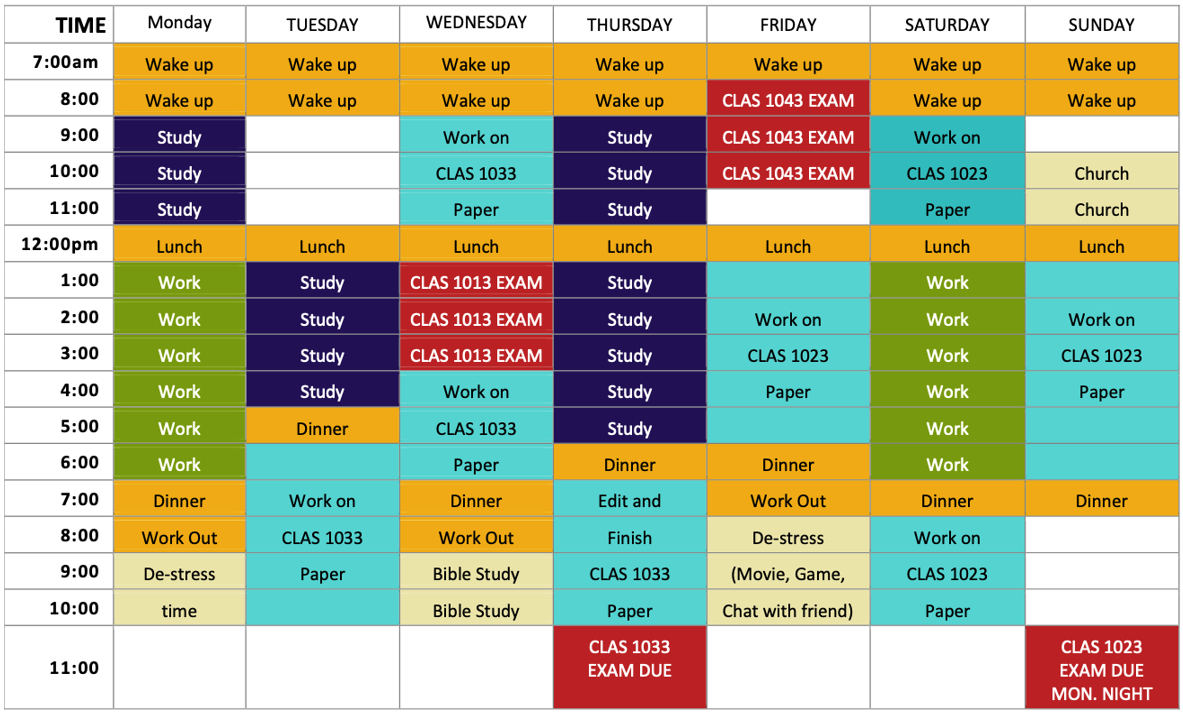
Whether your exam season consists of multiple take-homes or just one – and whether that exam is in a scheduled 3-hour block or takes place over multiple days – you're going to want to make a study schedule. This will help you budget time for studying, for writing longer take-home exams, for other life commitments, and even for de-stressing! Here is an example you may wish to follow:
Just Remember...
- Your schedule has to fit your life and your commitments.
- Make sure you take breaks where you don’t look at a screen!
- Find the balance that works for you, then run with it.

